
More intelligence. More returns.
For every industrial battery storage system.
Furo is the first software that seamlessly takes industrial battery storage systems from planning through operation into energy trading.
Trusted by leading companies in the energy industry







The platform for commercial & industrial battery storage
Most tools stop right where the project actually begins: at the quote. Furo doesn't. One platform accompanies battery storage projects across the entire lifecycle: from system design to AI-driven operational optimization to monetizing surplus capacity on energy markets.

in minutes, not weeks
Upload a load profile, enter the site location: Furo calculates the optimal storage size, economic viability and operating strategy, and generates customer-ready documents automatically.

Forecast-based optimization instead of static control. Furo forecasts electricity generation, electricity prices and power consumption – and controls the storage system accordingly. The Virtual Battery simulates returns, even before the storage system goes live.
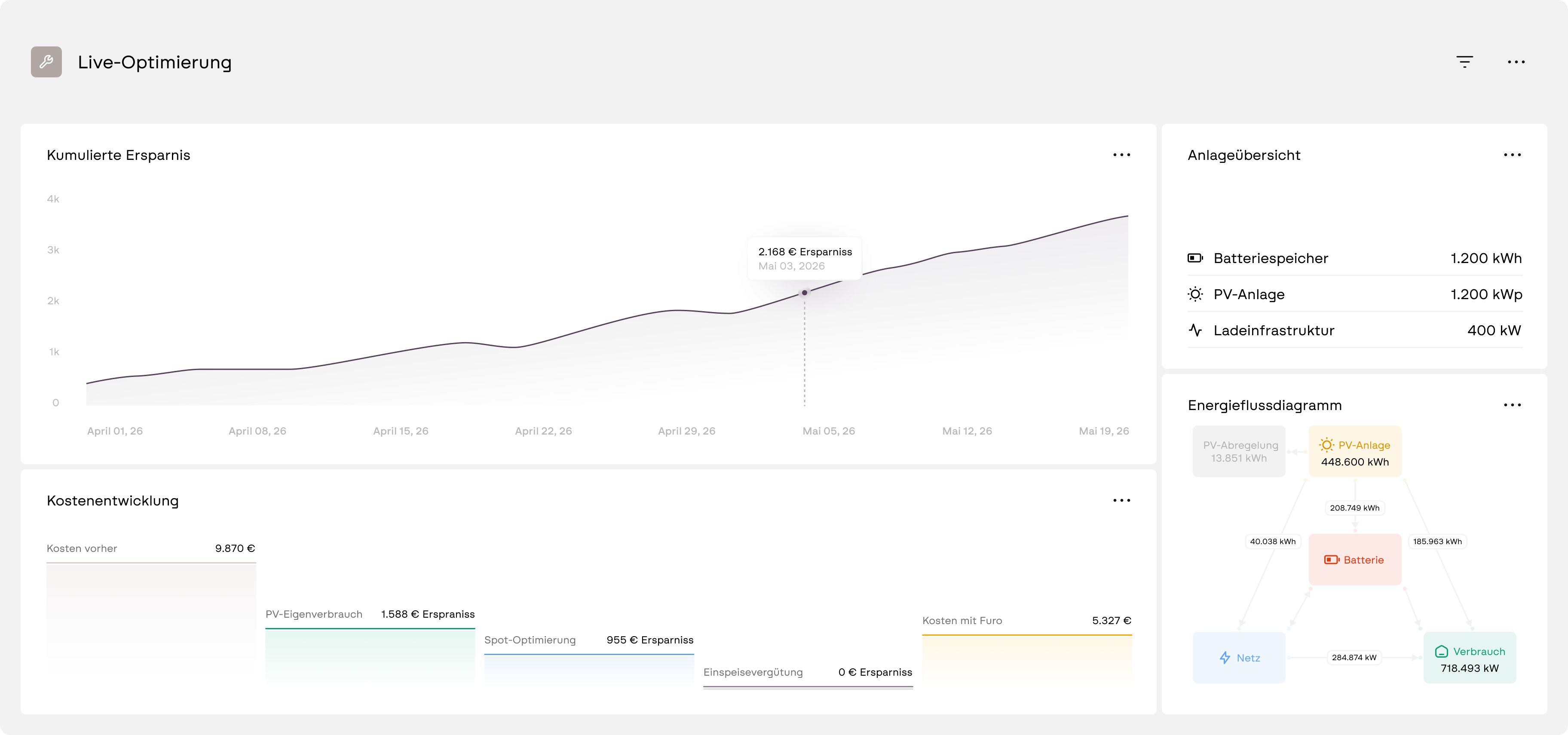
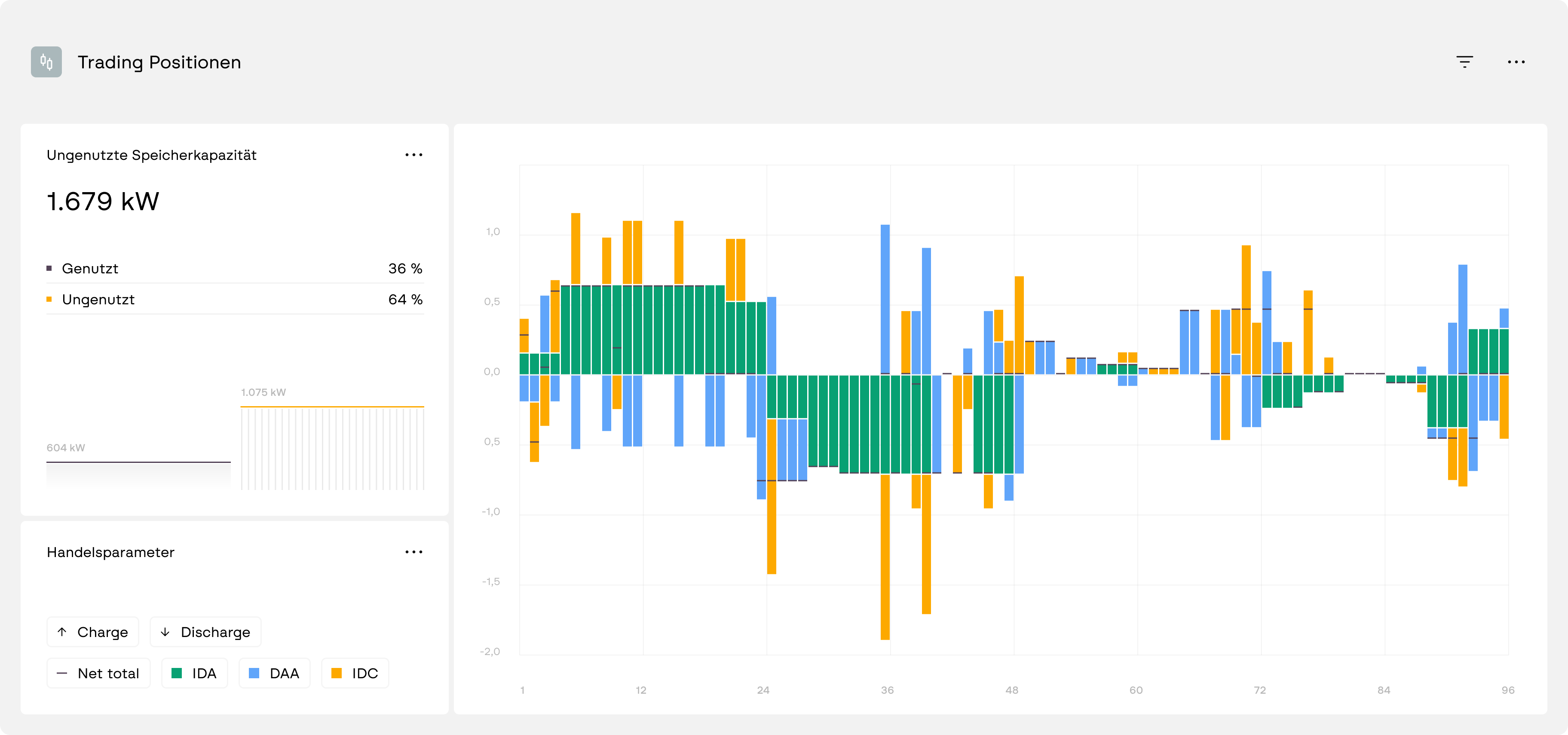
Furo identifies unused capacity and markets it automatically on energy markets – additional revenues that would otherwise be left on the table.
One battery, multiple revenue streams
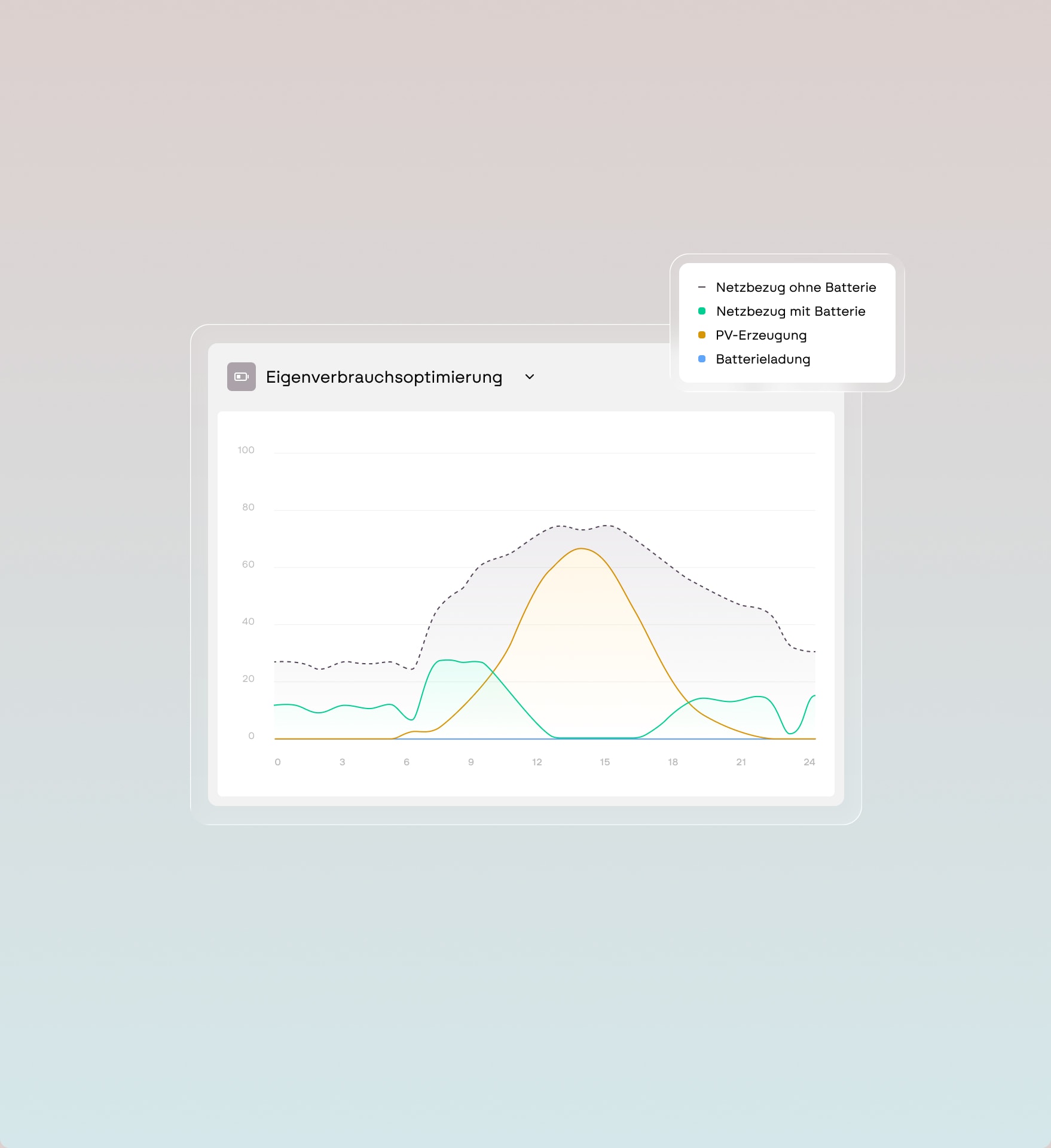
Self-consumption optimization
When the PV system produces more electricity than is currently being used, the battery charges with this surplus instead of selling it back to the grid at the low feed-in tariff. Once solar output drops or night falls, the battery discharges this stored energy instead of drawing expensive power from the grid. This way, as much of the self-generated electricity as possible is also self-consumed at the original, low cost of generating it.
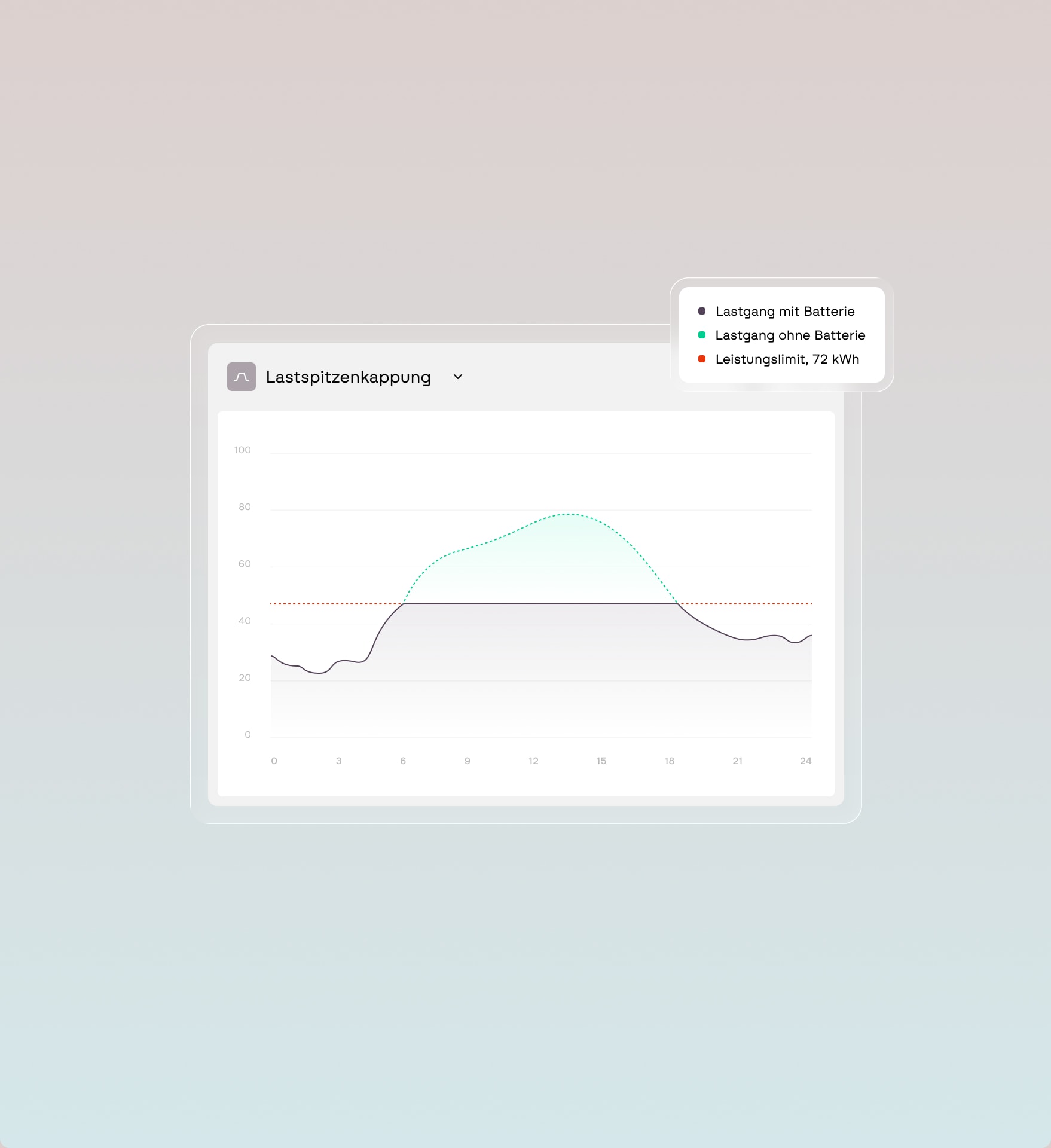
Peak shaving
Part of grid fees isn't based on how much electricity is consumed, but on the highest power drawn from the grid at any single point during the billing period (demand charge). The battery detects impending consumption spikes (for example, when several machines start up at once) and supplies energy from the battery instead of the grid at that exact moment. This keeps the peak grid load lower, noticeably reducing annual grid fees.
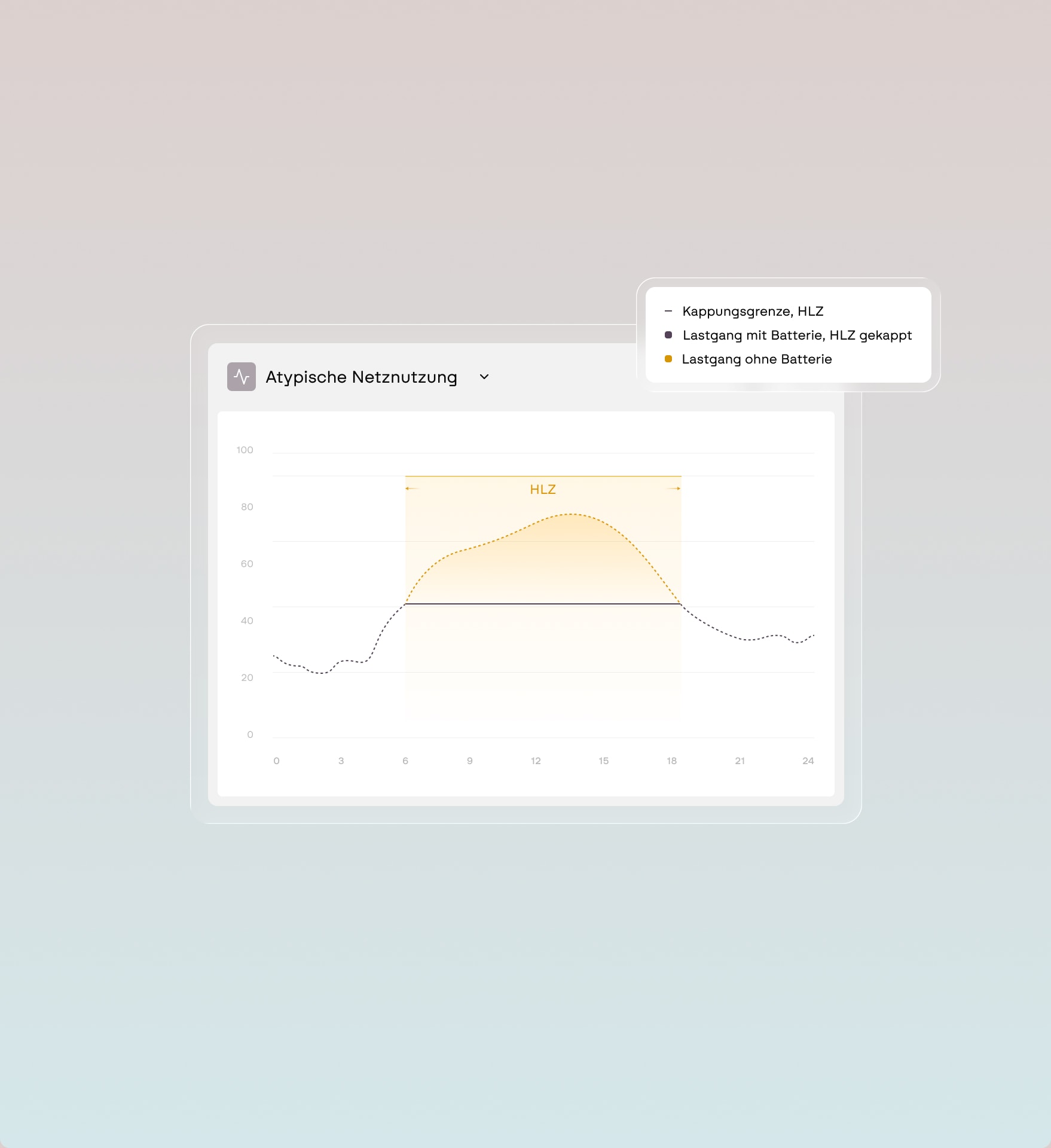
Atypical grid usage
Grid operators publish annual high-load time windows, periods when the grid is under particularly heavy strain. If a company can demonstrably draw little to no electricity from the grid during exactly these windows, it can apply for a reduced grid fee. The battery covers consumption during these windows from its own storage, keeping grid draw low during the critical periods and preserving the reduced tariff.
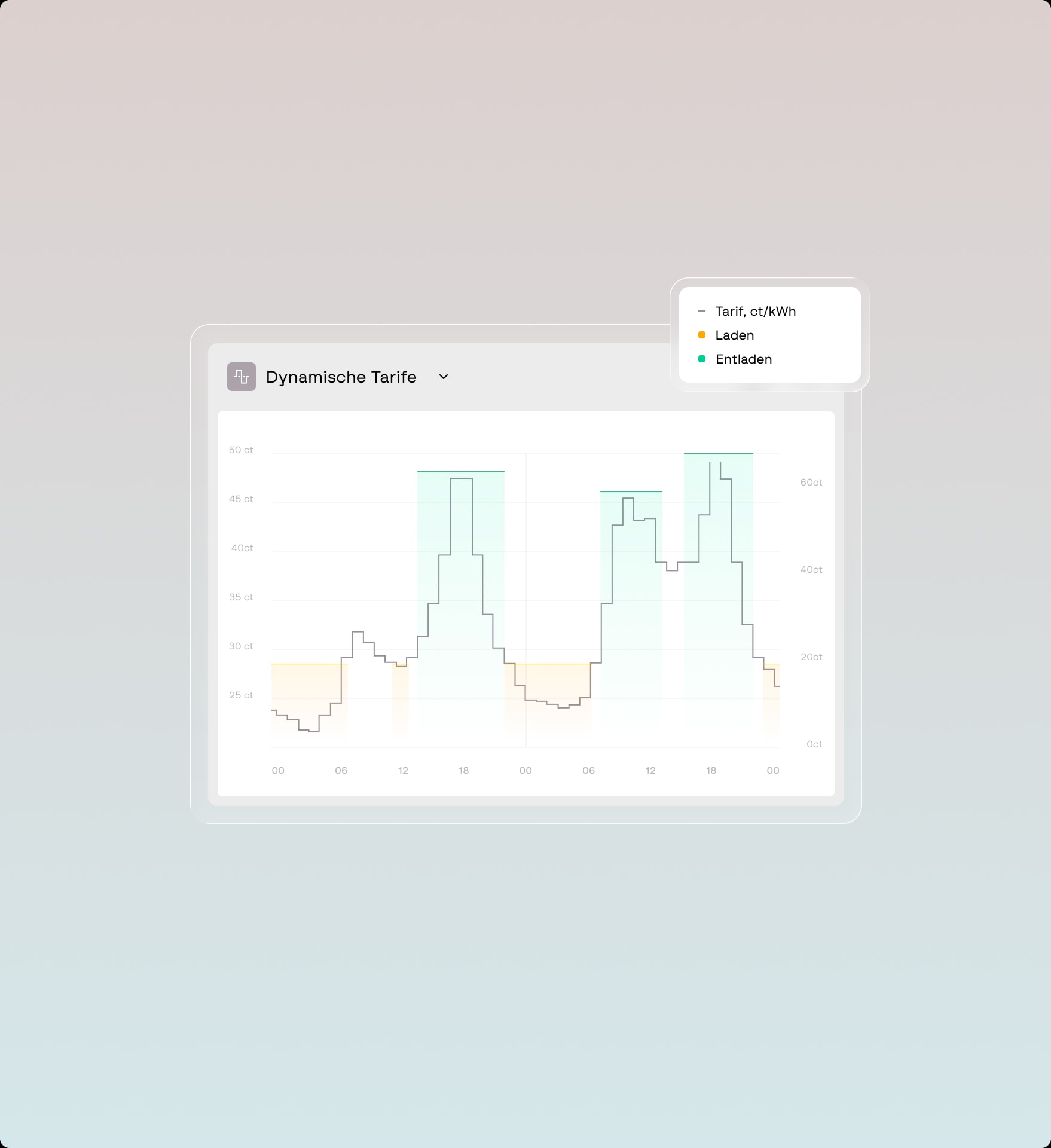
Energy procurement optimization
With a dynamic tariff, the electricity price changes hourly based on market supply and demand. The battery automatically charges during low-price hours and supplies the site from the battery during expensive hours instead of drawing from the grid. This systematically shifts electricity consumption into cheaper time windows, without any change to actual usage behavior.
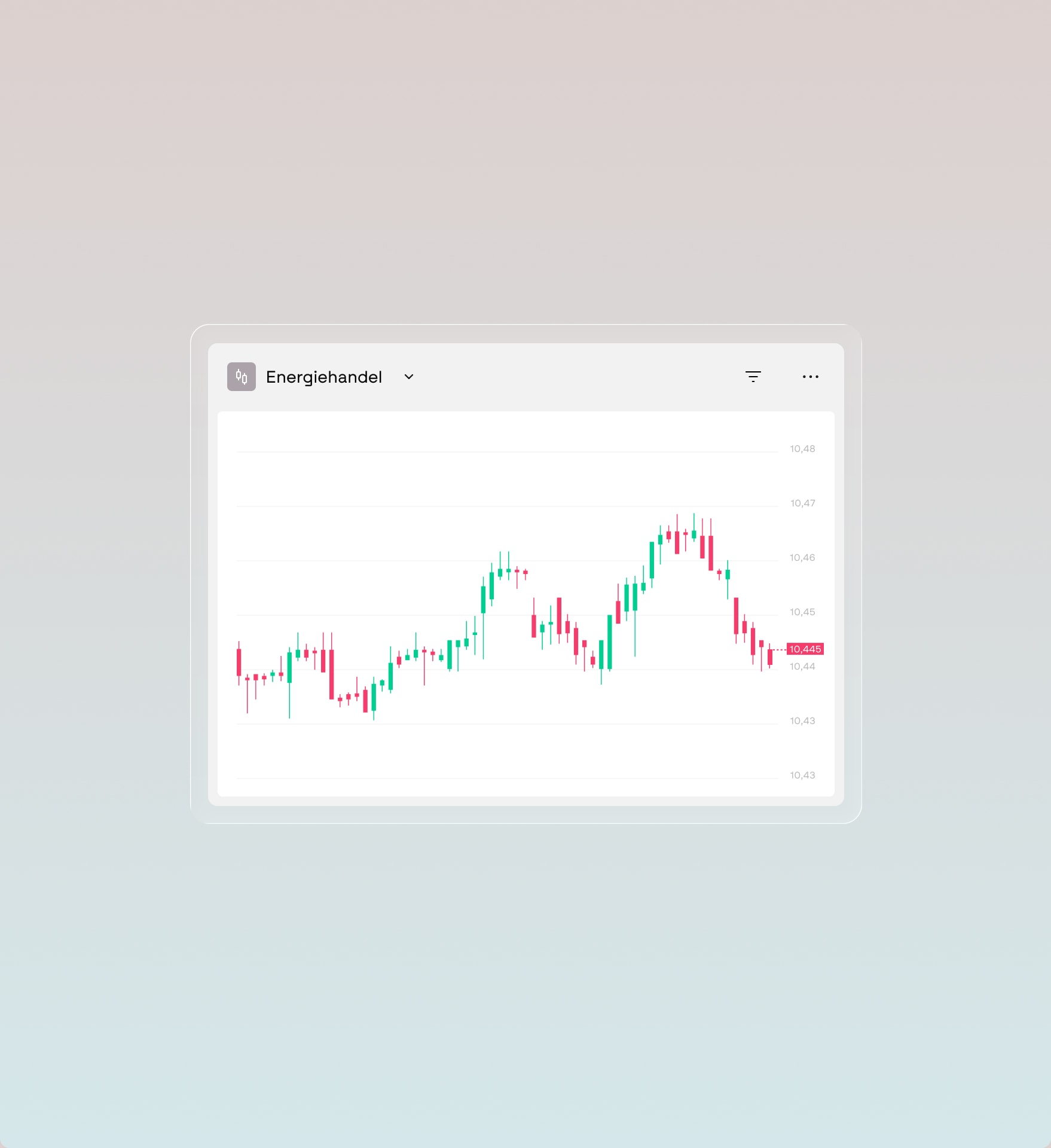
Energy trading
Larger battery systems can participate directly in the spot market as well as intraday and day-ahead trading: they charge when the market price is low and sell the stored energy when the price rises. Since these prices change multiple times a day, new trading opportunities arise continuously. The battery can also respond to short-term grid signals, helping support overall grid stability.

Multi-use optimization
The software decides in real time which of the use cases above delivers the greatest economic value at any given moment, and dynamically switches between them, rather than committing to a single fixed purpose. At the same time, it manages the battery's state of charge so there's always enough capacity available for whichever use is most valuable next. The result is a battery that serves multiple revenue streams throughout the day, instead of drawing on just one.
When the PV system produces more electricity than is currently being used, the battery charges with this surplus instead of selling it back to the grid at the low feed-in tariff. Once solar output drops or night falls, the battery discharges this stored energy instead of drawing expensive power from the grid. This way, as much of the self-generated electricity as possible is also self-consumed at the original, low cost of generating it.
Part of grid fees isn't based on how much electricity is consumed, but on the highest power drawn from the grid at any single point during the billing period (demand charge). The battery detects impending consumption spikes (for example, when several machines start up at once) and supplies energy from the battery instead of the grid at that exact moment. This keeps the peak grid load lower, noticeably reducing annual grid fees.
Grid operators publish annual high-load time windows, periods when the grid is under particularly heavy strain. If a company can demonstrably draw little to no electricity from the grid during exactly these windows, it can apply for a reduced grid fee. The battery covers consumption during these windows from its own storage, keeping grid draw low during the critical periods and preserving the reduced tariff.
With a dynamic tariff, the electricity price changes hourly based on market supply and demand. The battery automatically charges during low-price hours and supplies the site from the battery during expensive hours instead of drawing from the grid. This systematically shifts electricity consumption into cheaper time windows, without any change to actual usage behavior.
Larger battery systems can participate directly in the spot market as well as intraday and day-ahead trading: they charge when the market price is low and sell the stored energy when the price rises. Since these prices change multiple times a day, new trading opportunities arise continuously. The battery can also respond to short-term grid signals, helping support overall grid stability.
The software decides in real time which of the use cases above delivers the greatest economic value at any given moment, and dynamically switches between them, rather than committing to a single fixed purpose. At the same time, it manages the battery's state of charge so there's always enough capacity available for whichever use is most valuable next. The result is a battery that serves multiple revenue streams throughout the day, instead of drawing on just one.
What partners say about Furo

Matthias Strasser
Technical Sales & System Development, Connectika

Benjamin Schweikart
Senior Key-Account-Manager, ecocoach


Sabine Ruoff-Sixt
Head of C&I and Utility Solutions, BayWa r.e.


Franz-Josef Feilmeier
Managing Director, FENECON


Hans Glietenberg
Sales Lead, BATTR Energy


Ben Rohloff
Director B2B, Enpal Business Solutions

Questions? We have answers!
Furo is a hardware-agnostic software platform, compatible with any battery storage system. Plan your project for economic viability, get started with the virtual battery even before commissioning, and optimize operation and energy trading from day one. All seamlessly in one platform.
Furo generates daily 24-hour forecasts for prices, consumption and weather, derives optimal dispatch schedules from them and controls charging and discharging fully automatically. Connection to energy suppliers and direct marketers included.
Furo is hardware-agnostic and works with various storage manufacturers and control technology. Which hardware is specifically in use is best clarified in a short demo call.
The Virtual Battery simulates the real-time operation of your battery storage system before it even goes live. Instead of historical average values, it uses real market and load forecasts to show daily what your storage system would have earned today.
Furo continuously evaluates all use cases (e.g. self-consumption, peak shaving, dynamic tariffs, flexibility marketing) and automatically decides where the storage system is currently delivering the highest value.