When the electricity doesn't belong to the consumer: calculating operator models and PPAs correctly
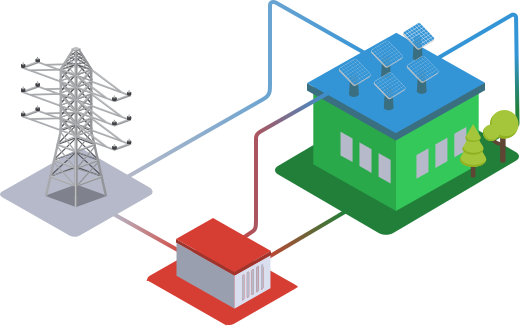
What is an onsite PPA?
A Power Purchase Agreement (PPA) is a long-term electricity supply contract between two parties: the operator, who builds and finances a generation asset — typically a PV system, often combined with a battery storage system — and the offtaker, who buys the generated electricity at a pre-agreed fixed price.
What sets the onsite PPA apart: the system is located directly on the offtaker's site or roof. The electricity therefore doesn't flow through the public grid but is consumed directly on site. The offtaker benefits from electricity prices that are typically below the grid supply price — without having to invest themselves. The operator earns the difference between their generation costs and the agreed PPA price.
This model is currently gaining significant importance: rising grid electricity prices make the PPA discount more attractive, and many commercial businesses cannot or do not want to tie up their own capital in energy assets.
The common model variants
Depending on the ownership arrangements and contract structure, different operator models emerge. The most important ones:
PV + storage belong to the operator
The classic case: an investor builds a solar system and battery storage on the offtaker's site. The offtaker buys all the generated electricity at the PPA price. Whatever isn't consumed, the operator feeds into the grid or uses to charge the battery.
Only the storage belongs to the operator — the PV belongs to the offtaker
An increasingly relevant variant: the offtaker already owns a PV system but doesn't want to finance storage. The operator provides the storage and receives a share of the savings achieved in return (profit sharing). (This variant will be supported in Lumera shortly.)
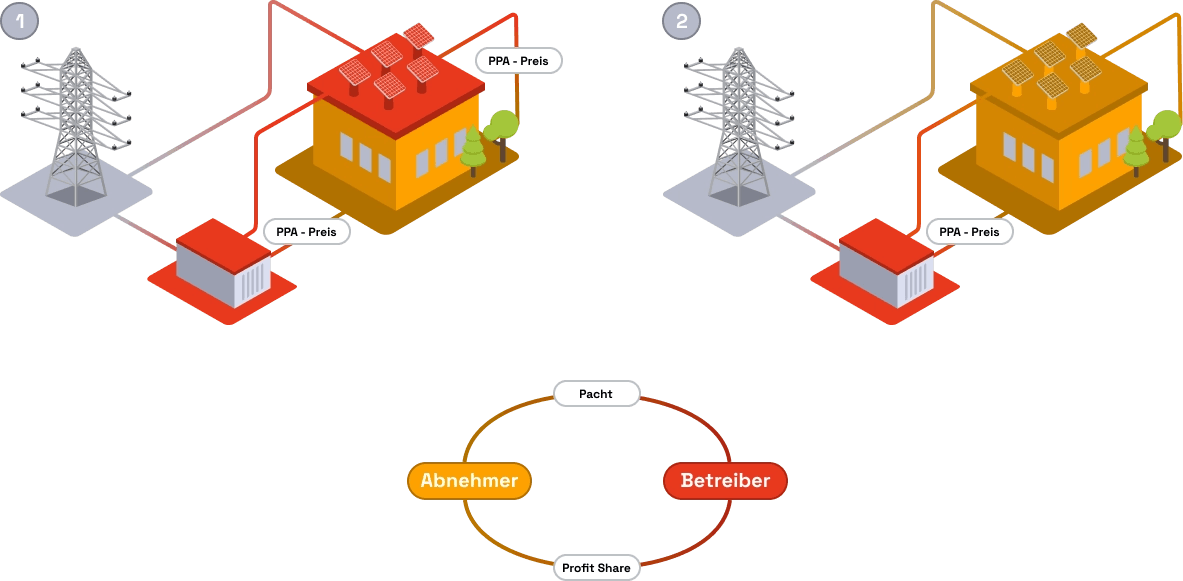
There are various remuneration models for this:
Offtaker pays the PPA price to the operator
The offtaker and operator agree on a fixed PPA price that the offtaker pays the operator for every kilowatt-hour from storage (and also from PV in model 1).
With a lease to the building owner
If the operator and building owner are not the same party, a lease payment is added as well — another cost item that must be accounted for in the operator's economic viability calculation.
Profit sharing on peak shaving
If the storage reduces the offtaker's maximum grid power, their demand charges in the grid fee bill go down. This saving doesn't automatically belong to the operator — it is split by contract, e.g. 70% operator, 30% offtaker.
The core problem: two parties, one system
Classic planning tools show the overall economic viability of a system: how much electricity is produced, what costs arise, how high the total savings are. That's enough for a self-consumer. For the operator model, it isn't.
The decisive questions remain unanswered:
What IRR does the investor achieve on their deployed capital?
How long is the payback period from the operator's perspective?
How much does the offtaker actually save — compared with pure grid supply?
Who gets which share of the peak load savings?
Without separating the two perspectives, you can neither negotiate PPA prices on a sound basis nor convince investors or banks.
Aside: what happens when the spot price exceeds the PPA price?
A situation that can arise in practice and is rarely considered: the offtaker has a dynamic electricity tariff — so their grid supply price fluctuates with the day-ahead market. The PPA price, by contrast, is fixed by agreement, e.g. 11 ct/kWh.
On days with very high spot prices — say 25 ct/kWh or more — it would be more lucrative on paper for the operator to feed the electricity into the grid rather than cover the offtaker's load. The offtaker would then have to draw expensive grid electricity, even though there is a system on their roof.
This conflict of interest is often resolved with a clear rule: covering the offtaker's load always takes priority over feeding into the grid. The operator optimizes only with the electricity that remains after the load is covered. This protects the offtaker and creates a fair basis for structuring the contract.
How to calculate it correctly
A correct analysis consistently separates the economic viability by party — based on the same technical simulation.
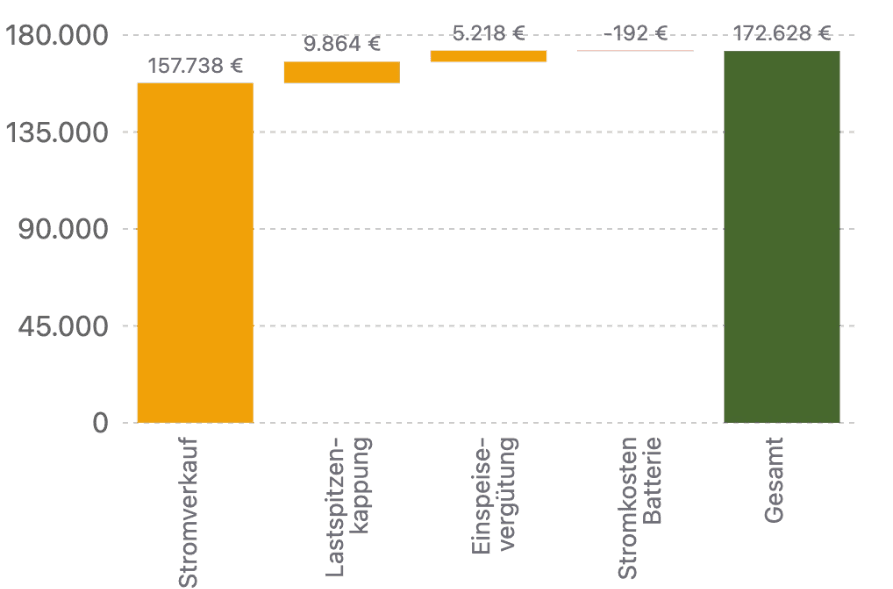
Operator perspective
The operator invests and bears the economic risk. What matters for them:
PPA revenues: Energy volume delivered (kWh) × PPA price. The main source of income.
Share of peak load savings: Their contractually agreed share of the offtaker's peak shaving.
Arbitrage revenues and feed-in tariff: Remain entirely with the operator.
IRR, NPV, payback: The metrics with which investors and banks assess the project.
Offtaker perspective
The offtaker doesn't invest — they save. What matters for them:
PPA savings: Energy volume drawn × (grid supply price − PPA price). The direct advantage over classic grid supply.
Share of peak load savings: Their share of the reduced demand charges.
CO₂ reduction and green electricity share: What percentage of consumption comes from the PPA system — relevant for ESG reporting.
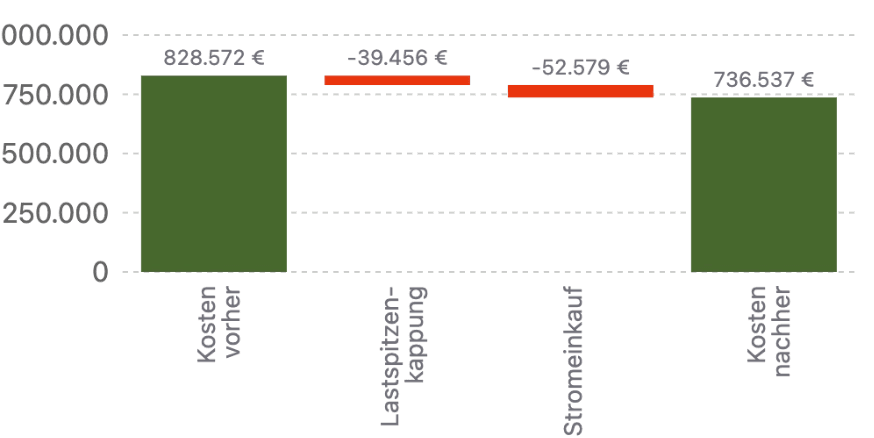
Lumera calculates both perspectives in a single analysis — based on the same simulation, without needing two separate tools or spreadsheets.
Conclusion
Operator models and PPAs are no longer a niche topic. They are the reality of many projects in which investor, operator, and offtaker have different interests — and all three need a sound basis for their decision.
A single overall calculation isn't enough for that. Anyone who wants to negotiate PPAs, convince investors, and develop fair contract structures needs both perspectives — separated, transparent, and based on the same technical simulation. The diversity of models will continue to grow in the future: new ownership variants, longer terms, more complex splits. Planning has to keep pace.
More Articles
Plant Certificates for Battery Storage: When You Need One, What It Costs, and How the Process Works
Lumera Energy becomes Furo
How battery storage really ages and how we model it
Charging a PV storage system with grid power: comparing the rules in Germany (MiSpeL) and Austria
Multiple PV systems at one site – an overview of compensation, meters and billing rules
A systematic electricity supply contract: why the choice of model matters more than the PPA price